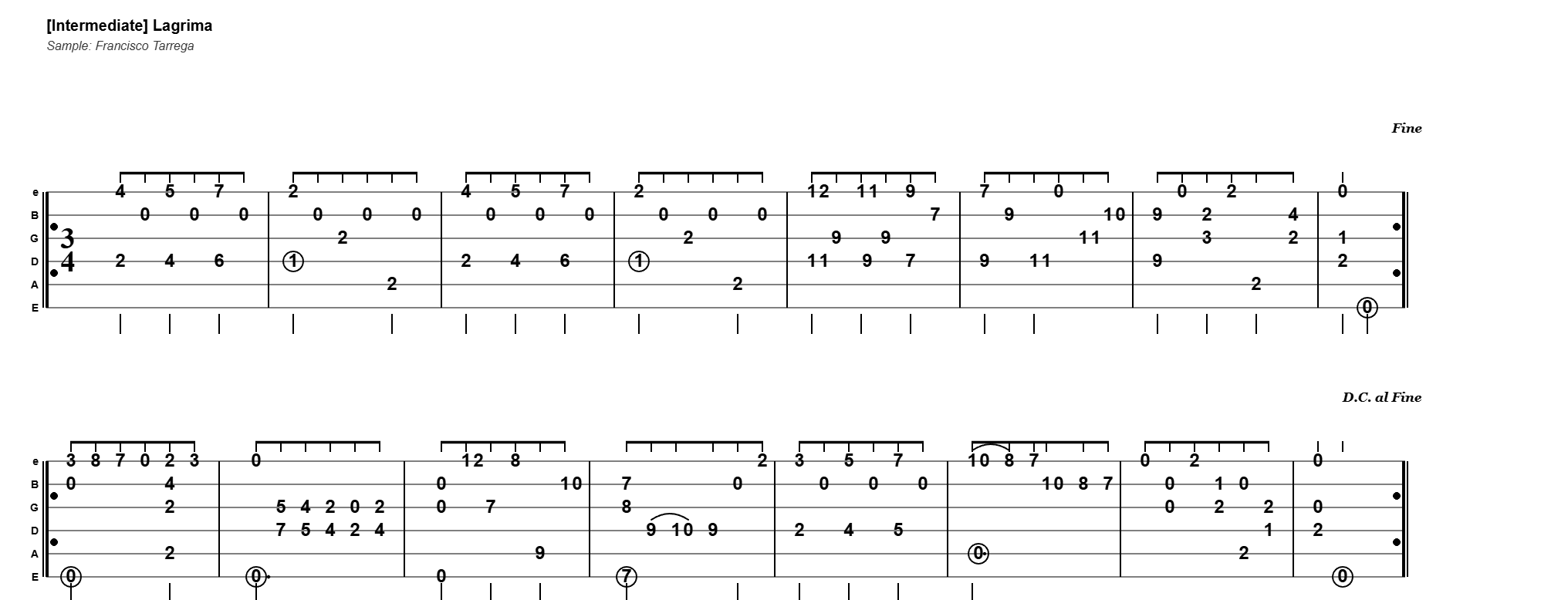
Lágrima, meaning "teardrop" in Spanish, is a short but deeply expressive solo guitar piece composed by Francisco Tárrega in the late nineteenth century. Tárrega, born in Villarreal, Spain in 1852, is widely regarded as the father of modern classical guitar. He pioneered the use of the right-hand fingerpicking technique that became the foundation of classical guitar playing and helped establish the instrument as a serious concert instrument in the European tradition. Lágrima is believed to have been composed around 1880 and reflects the Romantic era's emphasis on emotional depth and lyrical melody. Despite being only sixteen measures long, the piece contains a remarkable emotional arc — moving from a tender, melancholic opening in E major through a poignant middle section in E minor before returning to the warmth of the major key. This brief journey from light to shadow and back gives the piece its tearful name and has made it one of the most beloved and frequently performed works in the classical guitar repertoire. As a composition from the nineteenth century, Lágrima is firmly in the public domain and is an ideal piece for guitarists to study, perform, and hear performed live by a classical guitarist.
Writing your own music? Start a blank tab from scratch, free →
👁 Preview printable PDF/PNGAt the intermediate level, Lágrima becomes an excellent study in voice independence and dynamic shaping. Work on bringing out the melody on the treble strings while keeping the bass notes present but softer — this separation of voices is the heart of classical guitar technique. Pay close attention to the shift from E major to E minor in the middle section and use a subtle change in tone color to mark the transition, perhaps playing slightly closer to the bridge for a brighter, more urgent sound. Practice smooth position shifts by preparing your hand shape before you move, and aim for zero gaps in the sound during transitions. Add gentle vibrato on the longer melody notes to bring warmth and expressiveness to your performance.
This tab is rated intermediate, which means it is designed for guitarists at the intermediate level. You should be comfortable with basic chord shapes, simple riffs, and reading standard tablature notation before attempting this tab.
When you click "Load in Tab Editor" above, the tab opens directly in Guitar Scribble's free editor where you have full control over the content. You can modify any notes, add your own variations, insert technique symbols like bends, slides, and hammer-ons, and adjust the arrangement to match your playing style.
Once you are happy with your version, a free account lets you save it to your personal tab library, export it as a PDF for printing, or share it as a PNG image. The editor is completely free and works in any modern web browser without downloads or installations.