What is a "twelve bar blues"? The term "blues" does not just refer to a musical genre. It also refers to a musical form: twelve bars long, built on a specific set of chord changes, and usually paired with a call and response structure that runs all the way back to the work songs and field hollers the blues grew out of. Learn the form once and you can play it in any key, with anyone, for the rest of your life.
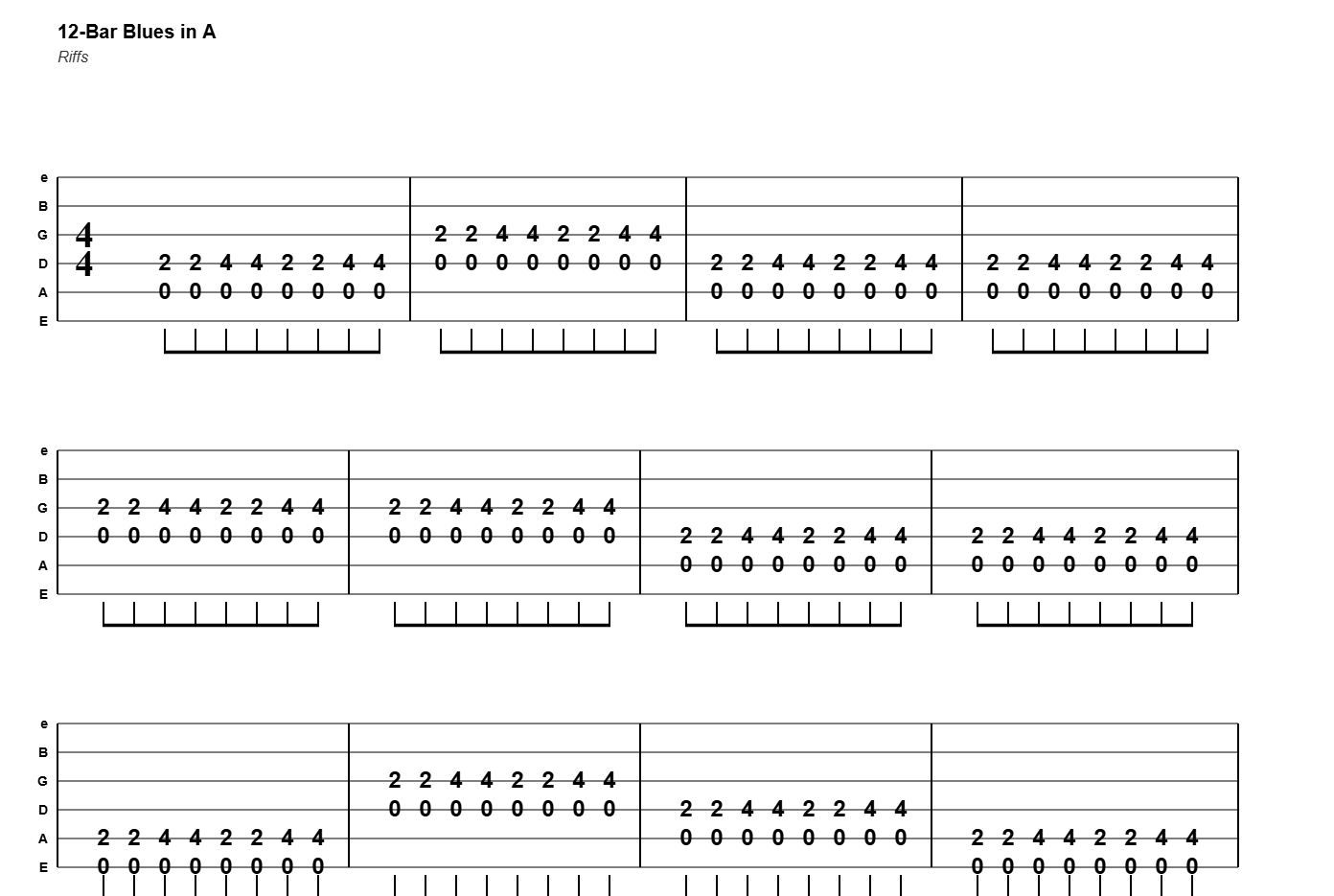
Here is how the twelve bars lay out. The first four bars generally sit on the "I" chord of the key, the A chord in the key of A. This arrangement uses the popular "quick change" variation, where bar two jumps to the "IV" early and comes right back, so the first four bars run I, IV, I, I. The next four bars move to the "IV" for two bars, then come back to the "I" for two bars. In this case D is the IV because it is the fourth note of the A major scale (A, B, C#, D, E, F#, G#). The last four bars in this arrangement run V, IV, I, V, but there are many possible variations, especially in those last four bars.
The lyrics generally follow the same call and response logic: a call sung over the first four bars, the same call repeated over the middle four, and a response that resolves the story over the last four. In the classic AAB shape it works like this:
Well the sun came up this morning, and I still was not back home
Yes the sun came up this morning, and I still was not back home
I have been out walking these old streets all night alone
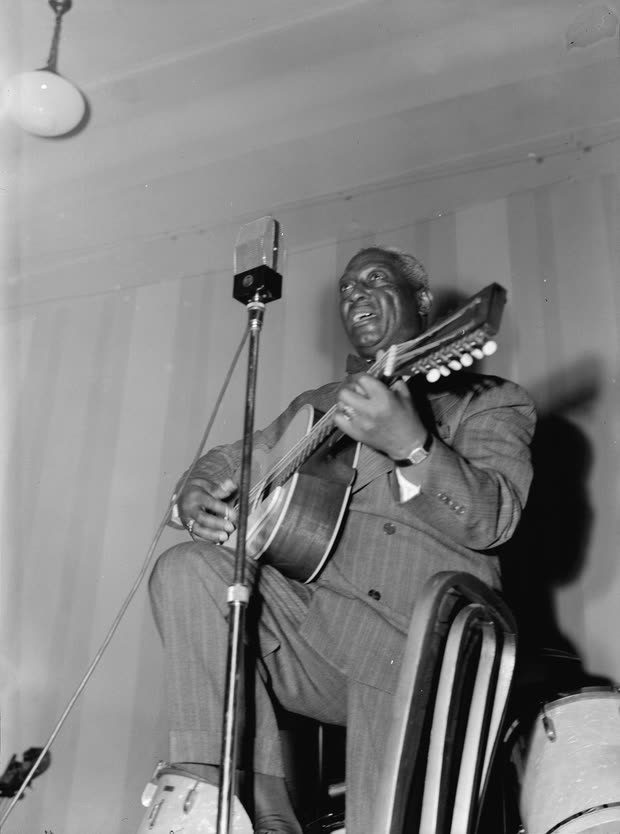
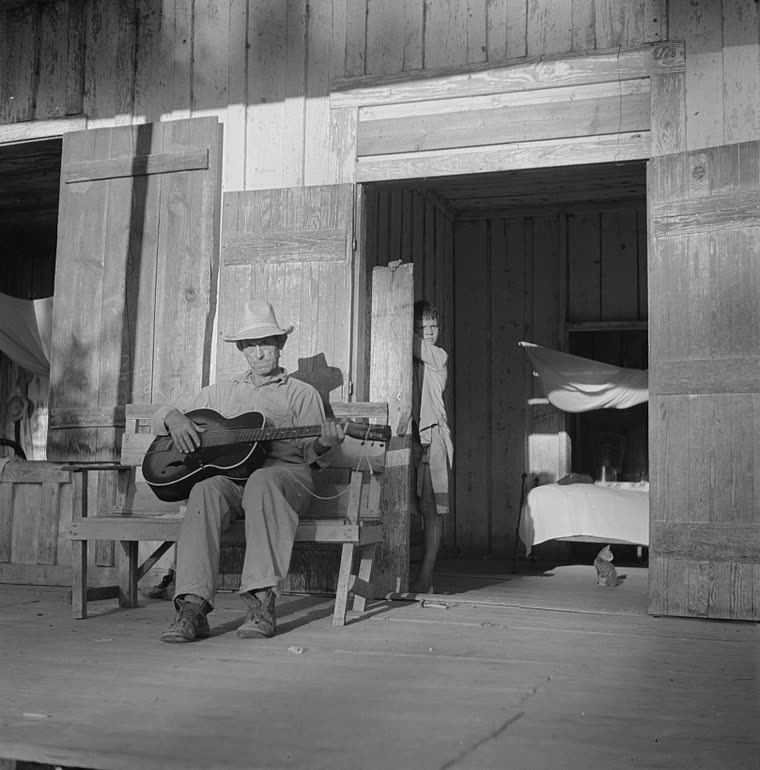
You can hear the form in thousands of classic songs in blues, rock and jazz: Texas Flood and Pride and Joy by Stevie Ray Vaughan, Red House by Jimi Hendrix, Sweet Home Chicago by Robert Johnson, Johnny B. Goode by Chuck Berry, Hound Dog, and Rock Around the Clock, which carried the twelve bar form straight into early rock and roll. Once you know the map, you will start spotting it everywhere.
There is a reason the twelve bar blues is the universal language of the jam session. Walk into a blues jam anywhere in the world, call out "blues in A," count it off, and total strangers can play together instantly, because everyone on stage knows exactly where the changes are going. For a developing guitarist that is gold: the form trains your ear to hear chord changes coming, builds your rhythm feel, gives you a safe and predictable place to learn improvisation, and teaches you to think in numbers (I, IV, V) instead of fixed chords, which means you can move to any key on the spot. Learn one twelve bar blues and you have not learned one song, you have learned hundreds.
Writing your own music? Start a blank tab from scratch, free →
👁 Preview printable PDF/PNGThis tab is a boogie style twelve bar blues in A, played with two note power chord shapes on the low strings, the same figure Chuck Berry and a thousand blues players built careers on. Every bar is eight eighth notes, but do not play them straight: this one is marked "Swing 8ths," which means each pair of eighths is played long-short with a triplet feel. Press play on this page and listen to the bounce, then match it. Keep your picking hand relaxed and use downstrokes at first, palm muting lightly near the bridge for that classic chug. The fretting stretch from the root to the sixth (the 2 to the 4 in the tab) is the only real physical challenge, so if your hand tires, pause and shake it out rather than pushing through tension. Most importantly, count your bars: the goal is not just to play the notes but to always know which of the twelve bars you are in. That awareness is what lets you jam with other people.
Riffs are short, repeated musical phrases that form the backbone of rock, blues, metal, and countless other genres. They are often the most recognizable part of a song — the part that gets stuck in your head. Learning riffs builds practical guitar skills quickly because they combine multiple techniques in a musical context rather than isolated exercises.
This tab is rated beginner, which means it is designed for guitarists at the beginner level. If you are new to reading guitar tablature, check out our complete guide to reading guitar tabs before getting started.
When you click "Load in Tab Editor" above, the tab opens directly in Guitar Scribble's free editor where you have full control over the content. You can modify any notes, add your own variations, insert technique symbols like bends, slides, and hammer-ons, and adjust the arrangement to match your playing style.
Once you are happy with your version, a free account lets you save it to your personal tab library, export it as a PDF for printing, or share it as a PNG image. The editor is completely free and works in any modern web browser without downloads or installations.