Traditional · Key of G · Public domain
This chart was made with the free Chord Sheet Maker: write your own charts, transpose in one click, print clean copies.
Opens in the Chord Sheet Maker in this key: change chords, add strumming patterns, and make it yours, with no account needed to start. A free account adds PDF downloads for printing.
Have your own songs? Start a blank chart from scratch, free →
This chart is written in G. Tap any key above the chart to see the whole song in that key, with every chord already worked out. To stay in G with different chord shapes, play it capo 3 with the E shapes, or capo 5 with the D shapes, or capo 7 with the C shapes. Singing with a group? Pick the key where the highest note is comfortable for everyone, then print that page.
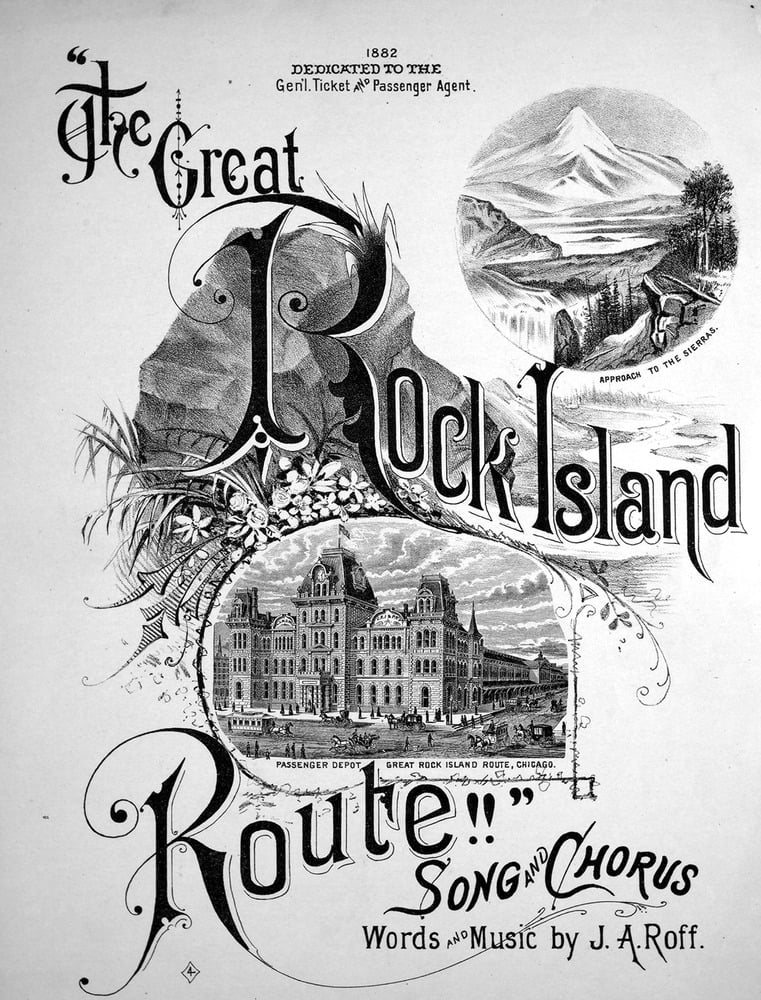
The tune started life as an advertisement. In 1882 J. A. Roff published The Great Rock Island Route, a song and chorus dedicated to the railroad's General Ticket and Passenger Agent, with the Chicago passenger depot on the cover and verses that run through the line's stops from the Atlantic to the Pacific. Its chorus, "Now listen to the jingle, and the rumble, and the roar," is the one everyone still sings. In 1904 William Kindt reworked the words under a new title, Wabash Cannon Ball, and by then the hoboes had taken the song for themselves: in their telling the Cannonball was a mythical train that ran everywhere and stopped at every town in the country, and George Milburn printed their version in The Hobo's Hornbook in 1930.
The Carter Family recorded it in 1929 and Roy Acuff in 1936, and Acuff's record became one of the biggest-selling country singles ever made. The song was so well known that the Wabash Railroad named a real train after it in 1949, a daytime express between Detroit and St. Louis that ran until 1971. At Kansas State University the band has played it since the 1960s; it was the one piece of sheet music rescued from the music department's Nichols Hall fire in 1968, and in 2016 ESPN called it the best pregame ritual in the Big 12. This chart uses the 1930 hobo verses. Words and melody are in the public domain.
Three chords in G: G, C and D. Verse and chorus use the same progression, so the whole song is one eight-bar pattern played over and over: G for most of the first line, C on its last word ("shore"), then D at the start of the second line and back to G at its end. Play it in a brisk 4/4 with an alternating bass (the boom-chuck of the old country records) and let the strum chug like the train. Keep the verses light and open up for the chorus, which is where the room joins in. The lines are long, so take a breath at each comma rather than rushing, and give the singers a clear pickup strum before "Now listen" so everyone comes in together. If G is high for your singers, D is one tap away.
Tap any chord for its diagram, other voicings, and the notes inside it.
Another train song: I've Been Working on the Railroad chords and lyrics
All the campfire and folk song chord sheets, each one in every key.
Further reading: Wabash Cannonball (Wikipedia)